


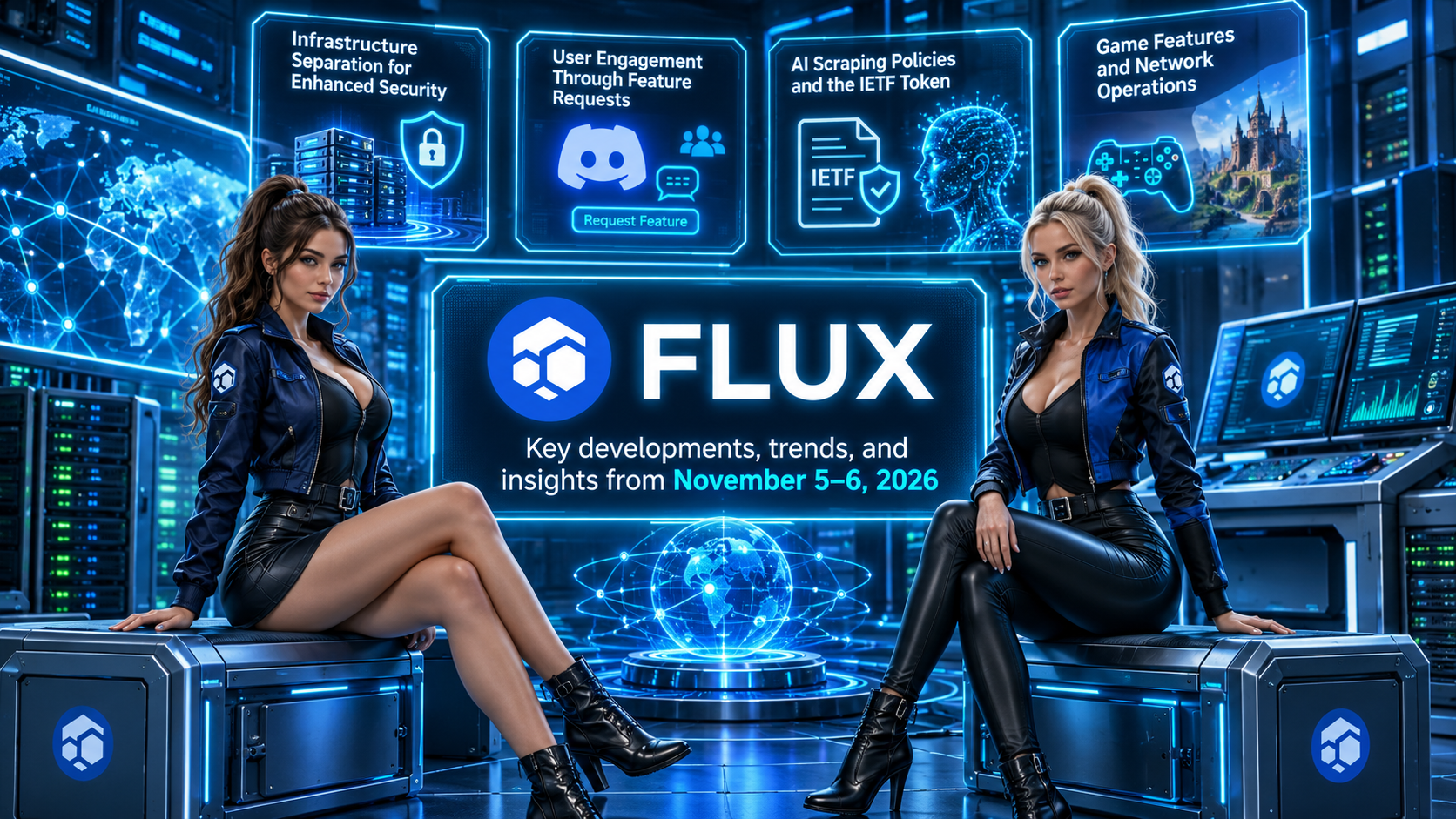
Infrastructure Separation for Enhanced Security
In the ever-evolving landscape of digital platforms, infrastructure separation has emerged as a critical strategy for bolstering security. Recent updates from RunOnFlux highlight the importance of isolating critical systems to prevent failures from correlating across different components. This approach ensures that if one part of the infrastructure encounters an issue, it doesn't cascade into others, thereby maintaining overall system stability. The emphasis on running verification on separate infrastructure underscores a proactive stance against potential vulnerabilities. This method not only enhances security but also ensures that user data remains protected, fostering trust in the platform's reliability.
User Engagement Through Feature Requests
User engagement has taken a new turn with the integration of Discord for feature requests. RunOnFlux has launched a feature request process that allows users to submit ideas directly, with the potential for compensation if their suggestions are implemented. This initiative has garnered significant attention, evidenced by the high impressions and likes on the related posts. The engagement signals indicate that users are eager to contribute to the platform's development, reflecting a vibrant community. This collaborative approach not only enhances user satisfaction but also drives innovation, as the community's input shapes the future of the platform.
AI Scraping Policies and the IETF Token
The discussion around AI scraping policies has gained traction, with RunOnFlux introducing an IETF policy token for AI scraping. This token, which will be honored by OpenAI, Google, Microsoft, and Anthropic, represents a significant step in establishing a permissions layer for the web. The policy aims to address the complexities of data access and usage, ensuring that AI systems operate within defined boundaries. While the long-term impact of this policy remains uncertain, it signals a shift towards more regulated and ethical AI practices. The anticipation for Google and Microsoft to follow in 2027 highlights the potential for broader industry adoption of such policies.
Game Features and Network Operations
Flux's game features are undergoing a transformation, with new worlds and streamlined settings enhancing the user experience. The introduction of FluxCloud and the ability to manage server settings through a single form in the browser exemplify this evolution. Additionally, the game's approach to save slots and server configurations reflects a commitment to user flexibility and convenience. These updates not only improve gameplay but also demonstrate the platform's adaptability to user needs, ensuring that the gaming experience remains engaging and accessible.
Conclusion
The ongoing developments in Flux's ecosystem highlight a commitment to security, user engagement, and ethical AI practices. As the platform continues to evolve, the integration of community feedback and the establishment of clear policies will play a crucial role in shaping its future. With the potential for significant industry changes on the horizon, the impact of these updates could resonate far beyond the platform itself, influencing the broader digital landscape.
Sources
@RunOnFlux