


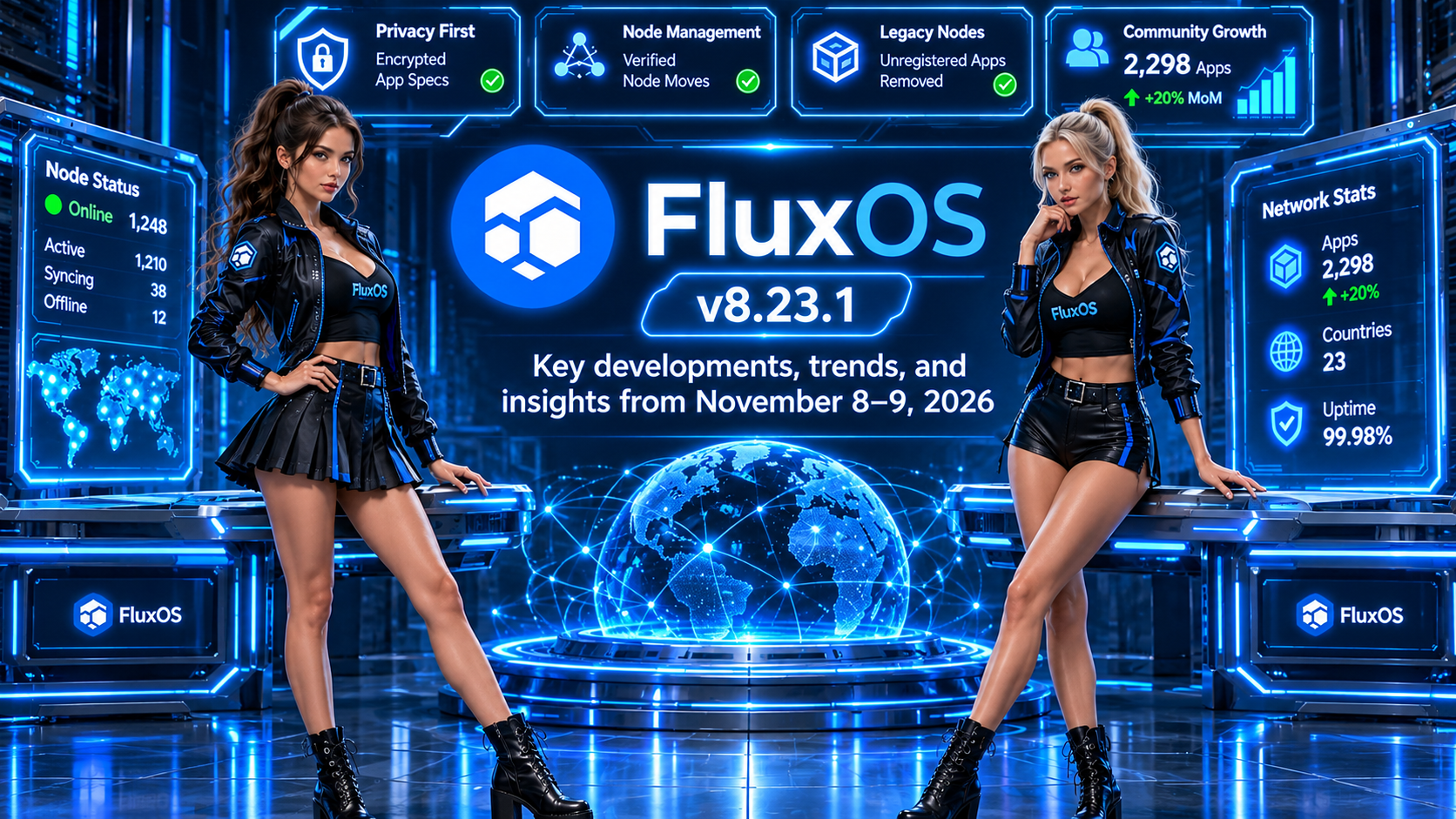
The FluxOS ecosystem continues to evolve with significant updates in its v8.23.0 and v8.23.1 releases, alongside deeper insights into node management, privacy enhancements, and community engagement. These developments reflect the platform’s ongoing commitment to security, scalability, and user-centric design. Below is a detailed overview of the latest advancements and their implications.
Key Developments: Privacy, Nodes, and Verification
FluxOS v8.23.0, released on November 6, introduced foundational changes to enterprise app specifications, ensuring that sensitive data remains unreadable at rest. This update aligns with the broader trend of zero-knowledge privacy protocols, reinforcing the platform’s stance on data protection. Just hours after v8.23.0’s release, v8.23.1 followed, further refining these features to ensure enterprise app specs are inaccessible in plain text, even when stored.
A critical aspect of these updates is the verification of on-chain node moves. This functionality allows users to confirm the legitimacy of node transitions, reducing the risk of malicious activity within the network. The ability to audit node movements in real-time is a significant step toward enhancing transparency and trust in the FluxOS infrastructure.
Legacy Nodes and Unregistered Apps: A Phased Exit
The latest updates also mark the end of an era for legacy nodes. Starting with v8.23.1, legacy nodes will no longer carry unregistered apps, effectively phasing out outdated configurations. This move is part of FluxOS’s broader strategy to streamline the network, ensuring that only verified and secure applications operate within the ecosystem.
The implications of this change are twofold: first, it reduces the attack surface by eliminating unregistered apps, and second, it encourages users to adopt newer, more secure node configurations. While this transition may pose challenges for some users, it ultimately strengthens the platform’s resilience against potential vulnerabilities.
Community Engagement: Insights and Growth
The FluxOS community has been actively engaged in discussions around these updates, with notable interactions on social media platforms. For instance, a tweet from @runonflux highlighted that 2,298 apps have seen a 20% monthly growth, with 58% of these being private deployments not featured on the homepage. These figures underscore the platform’s ability to support both public and private applications, catering to a diverse range of user needs.
The community’s response to these updates has been largely positive, with 33 likes, 9 retweets, and 1 reply indicating a strong interest in the platform’s trajectory. However, some users have raised concerns about the potential impact of privacy changes on user experience. For example, while the unreadable app specs enhance security, they may complicate data access for certain applications, prompting a need for clearer documentation and support.
Looking Ahead: A Balanced Approach to Innovation
As FluxOS continues to refine its features, the balance between security and usability remains a central theme. The recent updates demonstrate a clear focus on privacy, but they also highlight the importance of maintaining user-friendly interfaces and transparent communication. The Flux team has acknowledged these challenges, emphasizing their commitment to addressing user feedback through future iterations.
The Chinese app growth data from @runonflux further illustrates the platform’s global reach, with significant traction in markets where privacy and scalability are paramount. This growth is likely to influence future development priorities, as the FluxOS team seeks to expand its footprint in both public and private application ecosystems.
Conclusion: A Step Toward a Secure Future
The FluxOS ecosystem’s latest updates represent a pivotal moment in its evolution. By prioritizing privacy, streamlining node management, and fostering community engagement, the platform is positioning itself as a leader in secure, scalable infrastructure. While challenges remain, the proactive approach to innovation and user feedback suggests a promising trajectory for the FluxOS ecosystem in the coming months.
As the community continues to adapt to these changes, the focus will remain on ensuring that security enhancements do not compromise usability. The Flux team’s ability to navigate these complexities will be key to sustaining the platform’s momentum and solidifying its role in the broader blockchain landscape.
Source:
@RunOnFlux